A continuación encontrarás enlaces a estudios de posgrado, seminarios y otros cursos en los que participo y cuya convocatoria está abierta.
Un mapa de Nunca Jamás / Laboratorio Emilia
Yo, mediador / Troquel
Máster en Libros y LIJ / UAB
Ha nacido una estrella / Anatarambana
Próximas presentaciones:
Por acá ando como en tres pistas: presentando mis libros, impartiendo talleres para niños, niñas y jóvenes y dando charlas a especialistas.
36 Congreso Internacional de IBBY
Congreso Internacional de Lectura IBBY Cuba
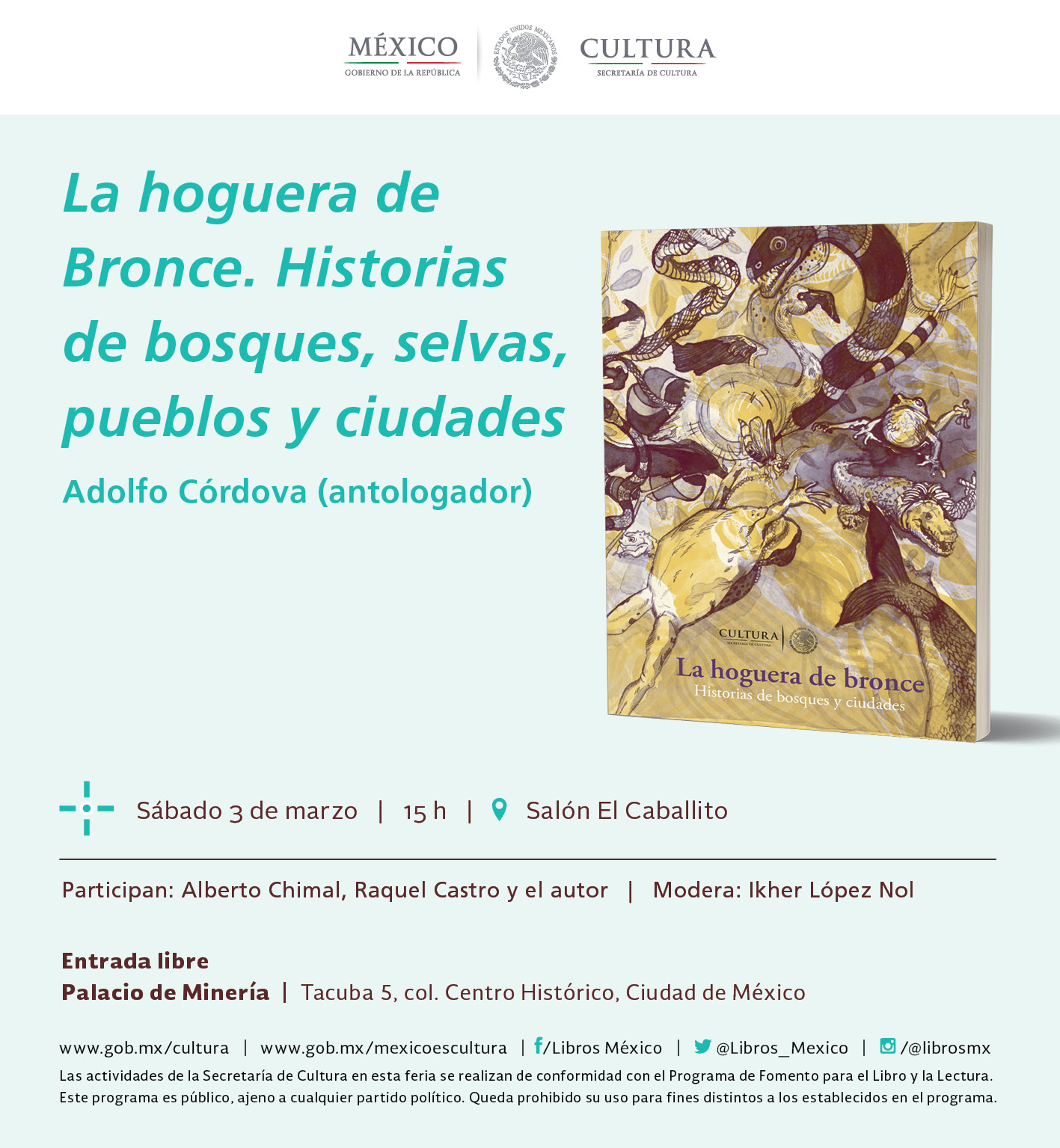
Feria del Libro de Minería
Feria del Libro de Minería
Colaboraciones:
Instituciones de las que he recibido apoyo para investigación o becas de creación artística o con las que colaboro como lector voluntario, consultor o profesor.
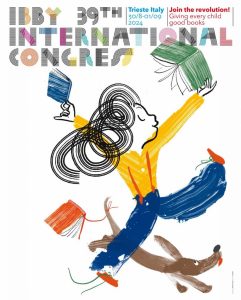
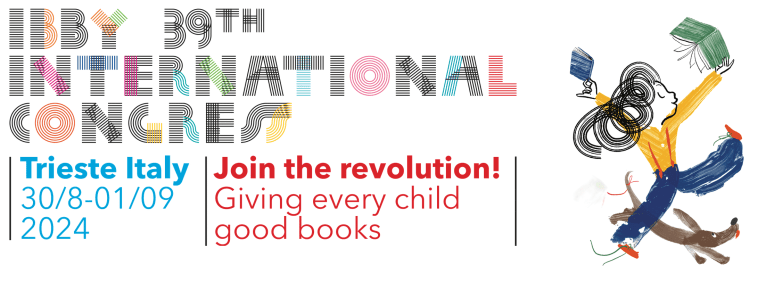
I prepared these reflections to discuss ‘poetry in children’s literature’ with poet Giusi Quarenghi at the 39th International IBBY Congress, held in Trieste, Italy, from August 30 to September 1 […]
I prepared these reflections to discuss ‘poetry in children’s literature’ with poet Giusi Quarenghi at the 39th International IBBY Congress, held in Trieste, Italy, from August 30 to September 1 this year.
To celebrate and to denounce. In an effort to highlight key aspects of the vast theme of ‘poetry in children’s literature,’ and to celebrate IBBY Italia’s groundbreaking initiative of including teenagers as speakers in the main program, I decided to reflect on conversations I’ve had with children and young adults about poetry, as well as books written by them that I have read.
This initiative, unprecedented in the history of these biannual congresses, also included a series of workshops for children and teenagers. To me, it was a powerful declaration of values in a world dominated by adult-centric violence. The ongoing global crisis of children’s and youth rights, tragically embodied in the greatest infanticide of the century—happening before our eyes and broadcasted in real-time—was the other pressing issue I sought to bring into this discussion. To denounce.
Elena Mattia, one of the young speakers, addressed these issues during the closing panel, where all the young participants shared their thoughts and a reading manifesto. Her words rang clear:
“Keep fighting for children, because that’s what you are all here for (…). Don’t forget to speak out, because if we forget, history will repeat itself. Don’t forget to talk about Palestine, Congo, Sudan, and all the other places and people who suffer. This is our shared responsibility,” said Elena. Her courage in listing destroyed libraries and directly confronting us with the reality that if we care about children, we must speak up, was, for me, the most meaningful moment of the congress (you can Watch it on video in my instagram account).
Elena had been speaking with two representatives from IBBY Palestine, Jehan Helou, former official of IBBY International, and Amal Barghout Karzai, illustrator and author. They shared with me the challenges they faced in trying to screen protest videos—footage that urgently needed to be seen on those large congress screens. Unfortunately, it didn’t happen.
I could not capture it on video, but when Elena finished her speech, she held up a Palestinian embroidered bookmark, raised her fist, and bowed her head, in silence. She reminded me of Greta Thunberg, who had been arrested just hours earlier in Copenhagen for protesting also against the Israeli State’s ongoing genocide in Gaza.
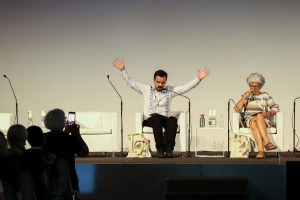
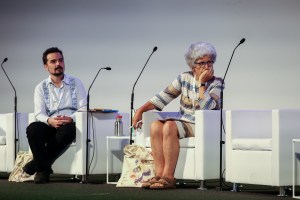
Although I originally wrote these thoughts as a script for my conversation with Giusi Quarenghi, along with Chiara Basile, director of the Junior Poetry Festival and content advisor for the congress, and Sylvia Vardell, president of IBBY International (2022-2024) and our moderator, we decided that, given our limited 30-minute timeframe and the potential interruptions of simultaneous translation (her in Italian, me in English), it would be better to split our time into separate presentations. We agreed on ten minutes each, so I condensed my text by cutting it in half.
I am now sharing this longer, revised original version with you and will post a Spanish version later, as I finalized the text directly in English.
Shortly after my participation, I visited Cornelia Funke in Tuscany and exchanged some of the ideas from my conference with her. She shared with me a conversation she had with Lawrence Schimel regarding an interview she gave to the German newspaper Die Zeit, which I decided to quote for its relevance. (Thanks to Lawrence for sharing the interview reference with me.)
It was a great honor for me to participate in this congress alongside Giusi and Sylvia, two great advocates for poetry, and to engage with an audience of people working from many fronts for children, youth, and their literature. A little box of Latin American poetry made it possible, as Chiara Basile, a member of the Bologna Ragazzi Award jury in the special poetry category that awarded our book Cajita de fósforos in 2021, proposed my participation to the congress committee. Since then, Chiara has generously invited me to be part of the Junior Poetry Festival and the Junior Poetry Magazine community, and each year we have imagined various collaborations.
This was my third IBBY International Congress. The first one I attended was held in Mexico City in 2014; at the time, I was a journalist who had just completed a master’s degree in children’s and young adult literature, handing out postcards promoting my newly launched children’s literature blog, Linternas y bosques. For the second congress, in Athens in 2018, I participated as an independent researcher in the parallel sessions to present my research on Latin American poetry, which later evolved into Cajita de fósforos (I received the support from Evelyn Arizpe of the University of Glasgow to attend all three days of the congress). This year I am very grateful to Chiara Basile and the IBBY Italia executive committee for inviting me, and to everyone in this community who has honored me with their time, trust, and attention. Everything I express in this text is meant as an invitation to contribute, never to subtract.
.
What is poetry? To open your arms wide, ‘The one that protects you from the bad’. IBBY 39th International Congress
1.
¿Dónde empiezo? ¿Dónde termino? ¿Qué hay en el camino entre mi frente y mis pies? ¿Cuántos mundos tengo?
Where do I begin? What is poetry for you?, I asked a group of children in Morelia, Mexico. Matías, a four-year-old boy, responds, first, only with his body: he spreads his arms wide. No words. Then he walks up to me, takes the microphone, and starts singing, “Luna lunera cascabelera.” His grandmother, from her seat, sings along, moving and spreading her arms too. As if they were mirrors.
Where do I begin? I think of my reflections, my grandfather, my grandmother, and my parents, who sang and read poems to me as I grew up. All those lullabies and poems, and the ones I have sung and read to others now, as we continue trying to reflect and intertwine with each other.
2.
Poetry can be a common ground where unexpected connections are revealed. A note on this visit from Veracruz to Trieste.
Ten years ago, during research on that Danish poet named Hans Christian Andersen, I found a photo of Andersen reading the newspaper, looking very serious. What was he reading? Ejnar Stig, then director of the Andersen’s Museum, which I was visiting in Odense, told me Andersen was reading the news of the execution of Maximilian of Habsburg in Mexico. Why would that news interest Andersen? Maximilian, who was the emperor of my country for a short period of time (1863-1867), had invited him to travel to Mexico, and in 1866, he sent him a title and a medal recognizing him as Commander of Notre Dame de Guadeloupe, an honor reserved exclusively for military Mexican leaders and some kings and queens abroad. Andersen was the only writer to ever received it. Maximilian, Max, as he was called, had known and read him as a child and has likely influenced his own venture into writing poetry.
Max married Princess Charlotte of Belgium, and it was here, in her home in Trieste, at the Miramare Castle, that he received a group of Mexican conservatives who convinced him to cross the ocean and take the throne of the Mexican Empire. From that castle, Max and Charlotte set sail, convinced that the Mexicans wanted them there. Their colonial mindset prevented them from imagining the abyss they were plunging into, a nation that had earned its independence from the Spaniards and did not want a new occupation and foreign rule.
“A little bit of daydream will guide you through every abyss”, wrote Amado Nervo, a pioneer of poetry for children in Mexico. How many worlds did Max imagine he would find as he embarked on the Adriatic Sea through night and day and in and out of weeks until he reached the port of Veracruz in Mexico? Even though the fate of princes was to break curses and become kings in Andersen’s tales, wouldn’t he also remember how many characters suffered under the domineering nature of kings? The vanity of an emperor with his new clothes, the ambition of another to capture the song of a nightingale, and the royal decrees that doomed The Little Mermaid?
A little bit of reverie and poetry is sometimes not enough to navigate the depths of our personal abysses.
3.
¿Dónde empiezo? ¿Dónde termino?
En mi puño / guardo una semilla / que sólo yo conozco / sombra de un árbol / que aún no echa raíces / La miro en silencio / me sumerjo. En mí / siempre crece el misterio.
Where do I begin? Where do I end? What lies between my brow and my toes? How many worlds do I carry? / In my hand / I cradle a seed / known only to me / the shadow of a tree / that has yet to take root / I look at it in silence / and dive within. Inside me / the mystery forever blooms.
The mystery of existence, of being a child. The Portuguese poet João Manuel Ribeiro says that when we read poetry, two mysteries meet: the mystery of the writer and the mystery of the reader.
In that liminal space, where these two mysteries converge, something sprouts, germinal, or flickers, luminous, or chimes, resonant, giving birth to new meanings: it reveals what we had not imagined, accompanies a question with warmth or joy, and sometimes evades interpretations, resonating only through its music…
In reading and writing poetry for children, I seek that space between two mysteries—a place between the lightning and thunder, where the adult meets the child, where memory meets the attentive present. There, what is there?
“Hay nubes que miran bajito / que abrazan los cerros / y que hablan con la tierra”. “There are clouds that gaze low / that embrace the hills / and speak with the earth”, says the mexican poet Nadia López García, from the nation of Ñuu Savi, which means “the people of the rain”.
“Los árboles del parque / dicen rayos de sol / entre sus ramas, / dicen pájaros traviesos, / gritan luz, susurran agua”. “The trees in the park / speak rays of sunshine / through their branches, / speak of mischievous birds, / shout light, whisper water”, wrote the Chilean poet Felipe Munita.
And then, writing not “for children,” but “with children,” as Argentinian poet and songwriter María Elena Walsh declared, seeking meaning from listening to their questions, marveling at their depth, and trusting their boundless imagination.
“Tú me ves pequeña, pero en mi corazón crece apretada una enredadera”.
You see me small, but in my heart, a climbing plant grows tightly wound.
Every time I read children’s poetry something within me expands, something within me resonates with the still-expanding universe. It has a touch of the mystical and the tangible.
Between two mysteries, where the languid pace of rain-soaked snails meets the swift fluttering of hummingbird wings.
4.
Yet, when reading and writing certain poetry for children, these two mysteries often dissolve, leaving only one desire between the writer and the reader: to instruct, to dictate who the child is, how they should think, behave, and even believe.
Poetry in children’s literature has been historically instrumental, tied to the school, the church, and the state, with didacticism, dogma, and patriotism shaping childhood, determining what is deemed suitable and appropriate for children, valued primarily for its educational benefits or its role in meeting curricular goals, and even defining what poetry should be.
Fortunately, kids know better. Matías opened his arms wide to described what poetry was for him, and there are many initiatives working between the two mysteries and with children and young adults that embrace a broader sense of poetry as well: Argentina’s “Festival de Poesía en la Escuela”, coordinated by Alejandra Correa and Marisa Negri; “La fete de la poesie jeunesse” in France, coordinated by Mateja Bizjak-Petit, and here in Italy, the Junior Poetry Festival, organized by Chiara Basile, and which inspired Mara Rahab and me to create “Yo nombro al mundo: festival de poesía en la infancia” in México. Together, we are beginning to build an international network of poetry festivals for children. I’m sure there are many more here, or many who are eager to start them. Join us, let’s focus on the readers… and their enigmas.
«Enigma» rather than «consigna», the word in Spanish for instruction or guideline, says Argentine writer Graciela Montes, because while everything withers under an instruction, everything becomes possible in the face of an enigma. There. Between two mysteries.
«My mother was a flash of lightning, and my father a cruel thunder that rumbles like the one that roared among the stars. Daughter of lightning and thunder, tell me, who could I be?», sings the traditional music son jarocho «El Buscapiés», from Veracruz, my homestate.
5.
How do we unleash poetry for children from its canonical definitions and educational tasks? How do we unleash children from our grown-up expectations?
“Everyone has the right to judge what is or isn’t poetry to them, because a text becomes poetry only when it is read as such”, says French poet Bernard Friot in his “Universal Rights to Poetry.”
But then Erendira’s teacher states: “Children’s poetry should only speak of beautiful things.” “No!” replies Eréndira León, one of her students, a 14-year-old reader and writer, “what about Umberto Eco’s Storia della bruttezza(History of Ugliness), Hoffmann’s Struwwelpeter and even Gianni Rodari’s La filastrocca di Pinocchio, the rhymed version of Pinocchio, with all the ugly bits”, says Eréndira “including the chapter Pinocchio says he would rather die than drink the bitter medicine”. (Eréndira describes herself as a “Pinocchiologist”. She was thrilled when I told her I was coming to Italy and asked permission to quote our conversation here.)
“Ultimately, what is poetry?”, continues Eréndira.
“It’s a rhythm to sing,” says Milagros, 4 years old. “A little verse of calm,” María Belén, 9 years old. “A letter from your boyfriend,” Anastasia, 6. “Words that tell you things that happen to people,” Milagros J., 6. “Something really, really, really long,” Inés, 8. “A poet is someone whose purpose is to think,” says Rocío, 9 years old. “A poet is someone who talks to you all day,” adds Lucila, 11. “Poetry are words that help the universe not to fight with weapons,” says Dante, 6 years old. “A poet is someone who writes words that love each other,” concludes Katja, 12 years old.
These answers were drawn from books published over the past 36 years by Silvia Katz in Salta, Argentina, as a result of her “Taller azul”. Each response could serve as the basis for a new shape-shifter manifesto: “A poet is someone who writes words that love each other.»
“Everyone has the right to be recognized as a poet, because every human being is endowed with a poetic relationship to language”: another universal right to poetry written by Bernard Friot.
Where do I begin? How many worlds do I carry? How many childhoods fit into a poem? Poetry loves to hybridize, to experiment, to play, and it can become a means to re-signify, expand, and strengthen our relationships. And much poetry frees children from the impositions of narrative order. Is the ‘narrative order’ the ‘adult order’? The adult order that demands answers: «What are you going to be when you grow up?» «What if I tell you who I am today instead?»
What else can poetry for children be?
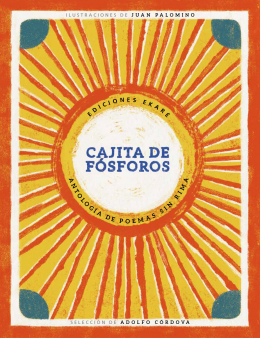
In an effort to address this question, I embarked a few years ago on a research project supported by the International Youth Library research fellowship. Titled “Mixed Sounds, No Rhyme: New Poetry for Children in Latin America, New Portraits of Childhood,” I presented this project at one of the oral sessions at the IBBY Congress in Athens in 2018 (where, by the way, I met Sylvia, the only one in the audience not among my Latin American friends), and curated an anthology of unrhymed poetry titled Cajita de fósforos, “Little match box”, illustrated by Juan Palomino, edited by María Francisca Mayobre, and published by Ekaré who won a Bologna Ragazzi Award in 2021. Our aim with this anthology was to imagine childhoods beyond the conventional, challenging a prevailing prejudice that insists poetry for children must rhyme. By presenting a diverse range of poetry we were seeking to spark the sense of wonder in those familiar only to traditional children’s verses.
Open our arms wider.
«Mi verso es libre de volar a donde quiera. Viene y se posa en la rama de algún árbol, en un alero, en la tendedera de la vecina, en cualquier página en blanco de mis cuadernos». “My verse is free to fly wherever it desires. It lands on the branch of a tree, on a cornice, on the neighbor’s clothesline, on any blank page of my notebooks”, wrote Cuban poet Antonio Orlando Rodríguez. To say “My verse is free…” or “My feet are free…” or “A child is free…”. That call for freedom resonates with the one of another pioneer of Latin American children’s literature, José Martí, when he wrote: «I come from everywhere and I am going toward everywhere.»
And with that of the Amazonian Peruvian poet, Ana Luisa Ríos, an IBBY’s Honor List author this year:
«Nací en Playa Tibi y crecí entre las garzas / buscando huevos de taricaya y también de tortuga, / las crecientes del río se llevaron esas tierras. / Mis papeles dicen que nací en Nauta, / pero mis ancestros son de todas partes, / aunque yo creo que nací libre como las garzas».
I was born on Playa Tibi and grew up among the herons, / searching for taricaya and turtle eggs, / the river’s floods took those lands away. / My papers say I was born in Nauta, / but my ancestors are from everywhere, / though I believe I was born as free as the herons.
6.
My conversation with Eréndira, the pinocchiologist, took place last Sunday at the IBBY Mexico library, just before the final presentation of a reading circle called “Ni pies ni cabeza,” which could be translated as “No rhyme or reason.” This reading circle is part of my new research on absurd humor and nonsense in Latin American children’s literature.
Could it be that absurd humor is foundational of children’s literature in Latin America, as evidenced by 1867 Rafael Pombo’s Cuentos Pintados, Painted Tales in verse, from Colombia? Should we consider that the very process of embracing language in childhood is imbued with elements of absurd humor? From the musicality of early babbling and the random first sentences that make sense only to the speaker, to the creation of spontaneous surreal poems, the irrational laughter when saying certain words, the improvised nonsense jokes and the linguistic play itself that defies conventional grammar—aren’t all these aspects rooted in the absurd?
Isn’t the resistance to following rules in childhood also the driving force behind the creator of absurd humor, who mocks the laws of possibility and defies the rigid narrative structures that demand a beginning and an end?
Where do I begin, where do I end? “What’s wrong with not knowing what I’m going to be when I grow up?”, says Andreu, my 10 years old nephew. “What if my head was where my feet are?”.
It was fascinating to witness how children and young people in this circle navigated absurd humor and nonsense as if they were in their homeland: it unleashed their creativity and prompted critical dialogues about the adult world.
“What if babies knew more than their parents”, says six-year-old Ramsés, which was particularly obsessed with babies superpowers and wanted a new world order with them taking the decisions. Román, shouts out a verse from a poem he wrote: «Let kings be slaves and slaves be kings.» But «No one should be a slave,» Eréndira says, recalling Gianni Rodari. “Neither a king”, completes Daniela, another teenager.
“What if it’s absurd but doesn’t make you laugh?” wondered, Iker, like war.
“Poetry are words that help the universe not to fight with weapons”.
7.
This reading circle became my sanctuary of laughter and play during these absurd and nonsensical times.
In a poem included in Cajita de fósforos (Little Matchbox), the Spanish poet Carmen Conde wrote: “La noche estaba quieta / prendida a las veletas de las torres. / Y la calle estaba muda, sola… / ¡Un caballo negro / la cruzó galopando…! / Yo no sabía / que la calle era de cristal”. “The night was still / clinging to the weather vanes of the towers. / And the street was mute, solitary… / A black horse / galloped through it…! / I didn’t know / that the street was made of glass.”
I think that the black horse is a metaphor for poetry, transforming our perception of the world.
I hear the furious gallop of that horse amidst the silence. It will shatter the glass so that everyone can hear, turn on the lights, and flood the streets to protest against the greatest infanticide of this century. Over 16 thousand 5 hundred children have been killed, more than 10,000 are missing, and tens of thousands more are injured, orphaned, and at risk of starving in Gaza.
“One by one / the chairs leave the café, / and a flock of our children crosses the sky, / slowly, time shakes off its mantle of laughter,” wrote Nasser Rabah, Palestinian poet born in Gaza. I translated this fragment of his poem, from a Spanish version sent recently to me by David Wapner, an Argentine Jewish writer for children living in Israel and a close friend of Nasser Rabah. Who told us that we are not all friends? When? Spanish poetry itself emerged from the Arab, Jewish, and Christian crucible. Who told us that we are not all friends?
I don’t want to sound naive; I want to sound realistic. Stories, those stories we so often celebrate in children’s and young adult literature, can also be harmful. With this new rise of fascism, “could it be that we’re telling the wrong stories?”, wondered the writer Cornelia Funke in a recent interview.
«Have our stories spoken too little about how everything, absolutely everything, is so much easier when we’re together rather than against each other? Have we told stories too infrequently about heroes who speak a different language, look different, or believe in things different from ours?» she asks.
Who began telling the story of hate? The story of hatred between any group of people? And why did we believe that fiction?
I return to poetry, which can free us from fixed identities, conclusions, and judgments, telling nothing but the revolution of a cloud speaking to the earth and a kid like Matías opening his arms wide.
What can poetry do for all these murdered children? What can we do to stop all the pain and death?
Perhaps we could think of Jella Lepman who walked through a destroyed city and found many orphaned children and responded to a teacher’s urgent plea: “Books! There are no books!” In addition to that international book exhibition, Jella achieved the same revolution that is being proposed here, ensuring that each child who visited the exhibition took a book home. You might remember that book was the pacifist Ferdinand the Bull.
Who will be the Jella Lepman for Gaza? Right now, while the bombs are still falling, it’s hard to imagine someone like Jella, who arrived in Munich after the war had ended. Who would have the courage to send copies of Ferdinand the Bull when there isn’t even enough drinking water for everyone? But when this genocide is over?
How will we rebuild the IBBY libraries that were destroyed, and bring poetry, calm, and a glimmer of hope? How will we support those still trying to create safe spaces under attack? How can we reimagine our work with books and childhood to ensure that children and young adults—like at this congress—are always at the center? How can we promote access to ‘good books’ in a field where they too often seem to be a class privilege due to their high costs? How can we foster less insular book markets and increase spaces for voices from the Global South?
Above all, how can we move from the revolution of giving every child a «good» book to a revolution that ensures every child’s rights are «good» and guaranteed. Poetry—whether children’s or otherwise—has historically been characterized by its critical stance toward injustice and its denunciation thereof, and its entire evolution has been marked by breaks with tradition that served as protest against prevailing modes of creating and conceiving art in contexts of repression. How can we stand against any form of violence?
We could ask Irene Vasco, the Colombian writer awarded this year with the IBBY – iRead Outstanding Reading Promoter Award, who brought books to children and created libraries amid the crossfire between the government and guerrillas in the jungles of Colombia.
I am confident that we could ask anyone here, as I know each of you represents a response, an alternative to hatred, and a path toward peace.
We could ask the young people, like those invited to this congress, the ones that have been saying ‘No’ from their homes to the streets and have started all the protests that lead to changes.
And let’s ask the children. What is poetry for you?, I asked a group of children in Campeche, Mexico. William Alberto immediately raised his hand and answered with conviction: “Es la que te cuida de los malos”, “It is the one that protects you from the bad”. After a brief pause, we all laughed as we understood the confusion. The words «poesía» (poetry) and «policía» (police) sound similar in Spanish. «William Alberto, I didn’t say ‘police,’ I said poetry,». He laughs, and we laugh with him.
I didn’t get into a discussion about whether the police in Mexico truly protect you—perhaps they do in Campeche—because his response also restores my original trust, which is so important in childhood: the belief that someone will take care of us. And yes, let’s remember, even if it may sound difficult in these times, that ideally, this should include the government and the police.
But furthermore, following Gianni Rodari once again and recalling ‘the creative error’ in his Grammar of Fantasy, William Alberto’s response reveals a profound meaning that I discuss with the children: in many ways, poetry (and music, dance, art, and conversation and gathering) protect us from evil. Poetry can moves us away from the literal message of a bomb and towards the metaphor that reveals how words can make us open our arms. «Luna lunera cascabelera».
Open our arms to each other as if we were mirrors. Help us remember a possible, simple answer: Where do I begin? Between two mysteries… and next to you.
Muchas gracias. Grazie mille.
References and Bibliography
Conde, C. (2021). Revelación. In Córdova, A. (Ed.) & Palomino, J. (Illus.), Cajita de fósforos (p. 14). Barcelona, Spain / Caracas, Venezuela: Ekaré.
Katz, S., et al. (2007). El pequeño ilustrado 2: Diccionario triciclopédico. Salta, Argentina: Ediciones Laralá Azul.
Katz, S., et al. (2021). La boca azul. Salta, Argentina: Ediciones Laralá Azul.
Lepman, J. (2017). Un puente de libros infantiles. Spain: Creotz.
López García, N., & Wetzka, C. (2024). Ma´na saa / El sueño de los pájaros. [Unpublished manuscript].
Martí, J. (1891). Versos sencillos. New York: Louis Weiss / Co, Impresores.
Montes, G. (2017). De la consigna al enigma. In Buscar indicios, construir sentido. Bogotá, Colombia: Babel.
Munita, F., & Echenique, R. (2016). Diez pájaros en mi ventana. Santiago, Chile: Ekaré Sur.
Munro, L., & Lawson, R. (n.d.). Ferdinando el toro (P. Belpré, Trans.). Madrid: Grupo Penguin.
Nervo, A. (2019). Viejo estribillo. In El éxodo y las flores del camino. Madrid: Editorial Evohe.
Pombo, R. (1867). Cuentos pintados para niños. New York: D. Appleton & Company.
Rabah, N. (2024). Una por una. D. Wapner (Trans.) [Unpublished manuscript].
Ribeiro, J. M. (2013). Versos de no sé qué: Antología de poemas (M. del S. Peralta, Trans.). Bogotá, Colombia: Panamericana Editorial.
Ríos, A. L. (2023). Canto libre en la floresta / Free song in the jungle. Lima, Peru: ICPNA.
Rodari, G. (1973). Gramática de la fantasía: Introducción al arte de contar historias. España: Editorial Siglo XXI
Rodríguez, A. O., & Vallejo, E. (1993). Mi bicicleta es un hada y otros secretos por el estilo. Bogotá, Colombia: Panamericana Editorial.
Walsh, M. E. (1965). El reino del revés. Buenos Aires, Argentina: Alfaguara.
Notes:
The uncredited poems in the presentation are my own work and come from the following books:
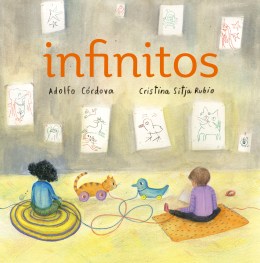
Córdova, A., & Sitja Rubio, C. (2020). ¿Dónde empiezo? In Infinitos. Ciudad de México, Mexico: Fondo de Cultura Económica (FCE).
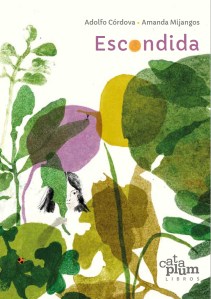
Córdova, A., & Mijangos, A. (2022). Tú me ves pequeña… In Escondida. Bogotá, Colombia: Cataplum.
About the reading experiences I shared:
Matías’s response came on September 28, 2023, during a poetry reading and game session I conducted with children and young adults at the «Yo nombro al mundo: festival de poesía en la infancia» in Morelia, Michoacán. This was the second edition of the festival, organized by Mara Rahab as part of the Morelia International Book and Reading Fair. A post of the event can be found on my Instagram and Facebook.
The reading circle «Ni pies ni cabeza,» in which Eréndira León, Román Vargas, Andreu Vázquez, Daniela Suárez, Iker Elías, and seven other children and teenagers participated, took place at IBBY Mexico on Sundays from July 21 to August 11, with the final presentation on Sunday, August 25. Ramsés was not part of this group but came from a summer course at IBBY, with whom I also had several reading sessions. My research on absurd humor and this circle were part of the «Octavio Paz Literary Residency for Essays on Children’s and Young Adult Literature,» which I completed with the support of the Octavio Paz Chair at the Colegio de San Ildefonso, the Mexican Letters Foundation, and IBBY Mexico. You can find a reference to it on Instagram.
The event with William Alberto and his classmates from the «Justo Sierra Méndez» Primary School in San Francisco de Campeche took place on November 16, 2023, at the «El Claustro» Cultural Center, as part of the International Children’s and Young Adult Book Fair in the city of Campeche, Mexico. Here is an Instagram post of the gathering.
Entrada No. 249 Autor: Adolfo Córdova. Ilustración de portada: Alessandro Sanna para IBBY Italia, organizador del 39° Congreso Internacional de IBBY en Trieste. Fecha original de publicación: 14 de septiembre de 2024.
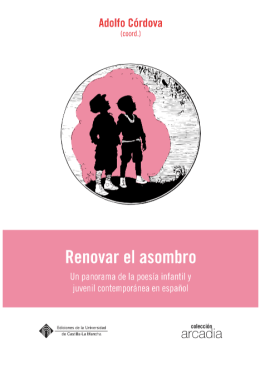
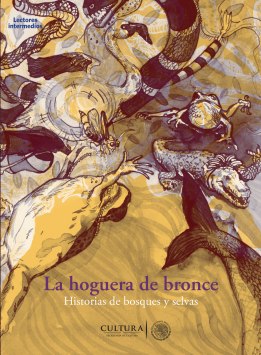
Periodista, escritor, investigador y mediador de lectura. Máster en Libros y Literatura Infantil y Juvenil por la U. Autónoma de Barcelona. Jurado de premios de LIJ nacionales e internacionales, miembro de comités editoriales, profesor en instituciones y universidades de México y el extranjero y colaborador de bibliotecas y proyectos comunitarios de promoción lectora. Ha sido becario de la ONU, el FONCA, la Biblioteca Internacional de la Juventud en Múnich, el CEPLI en Cuenca y la Fundación de Cornelia Funke en California. Entre otros reconocimientos ha recibido el Premio Nacional Bellas Artes de Cuento Infantil Juan de la Cabada 2015 y The White Ravens 2017 por su libro El dragón blanco y otros personajes olvidados (FCE, 2016); y el Premio Antonio García Cubas 2019 del INAH al mejor libro y labor editorial, en categoría obra infantil y Los Mejores del Banco del Libro por Jomshuk. Niño y dios maíz (Castillo, 2019). Como antologador ha publicado La hoguera de bronce. Historias de selvas y ciudades (Secretaría de Cultura, 2017), Renovar el asombro. Un panorama de la poesía infantil y juvenil contemporánea en español (UCLM, 2019) y, próximamente, Cajita de fósforos. Antología de poemas sin rima (Ekaré, 2020). En todas sus áreas de especialización le interesa el diálogo directo con niños, niñas y jóvenes. Tiene un blog de periodismo especializado en literatura infanitl y juvenil: linternasybosques.com.
...
De niño me gustaba jugar a los desastres naturales, inventar cuentos y pasear en mi triciclo rojo.
Todos los domingos íbamos a la playa. Pero yo prefería los nortes del invierno. O brincar de una roca a otra en la selva de los Tuxtlas y no me importaba nadar en albercas con el agua verde.
Nací a medianoche, en los primeros minutos del 15 de agosto de 1983, en un cuarto de un hospital muy pequeño, que tenía una ventana por la que se veía un almendro. En Veracruz, México.
Espero envejecer como mis abuelos y que alguna vez alguien vuelva a mis libros para volver a su infancia.
---
He tomado talleres de crónica, narrativa y literatura infantil y juvenil con María Teresa Andruetto, Teresa Colomer, Marina Colasanti, Daniel Goldin, Brenda Bellorín, Cecilia Silva Díaz, Michèle Petit, Joëlle Turin, Jorge Volpi, Ignacio Padilla, Manuel Peña, Julio Villanueva Chang, Andrea Fuentes Silva, José Luis Martinez Suárez, José Homero, entre otros.
Tengo un máster en Libros y Literatura Infantil y Juvenil de la Universidad Autónoma de Barcelona. Estudié Ciencias de la Comunicación, enfocado en Periodismo, y un certificado en Literatura en la Universidad de las Américas Puebla con la beca Excelencia Jenkins. Fui editor del periódico universitario y presidente de la asociación ambiental estudiantil.
Mi tesis de licenciatura, dirigida por Ignacio Padilla, fue una propuesta de revista de arte y ambientalismo que me hizo graduarme con Magna Cum Laude, obtener el Premio Estatal de Periodismo Luis Tecuapetla en Puebla y el segundo lugar del Premio Nacional de Trabajos Recepcionales del CONEICC. Una versión muy parecida de la revista fue adoptada por el periódico Reforma para publicarla bimestralmente con el nombre de “Verde” y continúa vigente.
Fui reportero y editor de suplementos especiales del periódico Reforma, donde constituí y edité varias revistas. He publicado mis textos en revistas digitales e impresas como Punto en línea, Picnic, La Peste, Pijama Surf, Letras Explícitas, Registro, México Desconocido, Revista Había Una Vez, Cuatrogatos, Ventana de Papel, Ciclo y Genial y Like (revistas y secciones infantiles y juveniles del periódico Reforma).
Fui elegido por el Banco Interamericano de Desarrollo como periodista representante de Latinoamérica para la cobertura del Primer Foro de Crecimiento Verde celebrado en Seúl, Corea del Sur; por las Naciones Unidas para cursar talleres de periodismo ambiental en Indonesia y Panamá; y por la embajada de Israel en México como periodista represente de Latinoamérica en la Conferencia de Tecnologías del Agua PRE WATEC en Tel Aviv.
Vivo en la ciudad de México desde el 2008. Escribo de viajes, medio ambiente y LIJ para el periódico Reforma.
Trabajo con grupos de promoción de lectura en primarias y en la Biblioteca Vasconcelos, y soy fundador de la biblioteca comunitaria BRINCO-Lectura.
Soy miembro de la Red Internacional de Investigación Universitaria en LIJ, por la Universidad Iberoamericana de la Ciudad de México. He impartido talleres y ponencias en diversos congresos y encuentros, y soy profesor invitado en los cursos de LIJ de la Universidad Nacional Autónoma de México y en A Leer/IBBY México.
También colaboro con la Dirección General de Publicaciones del CONACULTA, la revista chilena Había Una Vez y la Fundación Cuatrogatos.
Además soy educador ambiental certificado por el CECADESU.
Ha sido becario de la ONU (2010) y el programa Jóvenes Creadores del FONCA en dos ocasiones (2013-2014; 2018-2019); realizado estancias de investigación en la Biblioteca Internacional de la Juventud en Múnich (2017) y el Centro de Estudios de Promoción de la Lectura y Literatura Infantil, CEPLI, en Cuenca (2017), y residencias artísticas en el Centro de las Artes de San Agustín, Oaxaca (2018) y en California con la Fundación de Cornelia Funke (2019, 2020).
Blog de lectura crítica y periodismo especializado en literatura infantil y juvenil.
Soy Adolfo Córdova Ortiz*, escritor, periodista, investigador y mediador de lectura independiente. Cursé el Máster en Libros y Literatura Infantil y Juvenil de la Universidad Autónoma de Barcelona en 2012-2013 y en enero de 2014 lancé este blog. He sido becario de la ONU, el FONCA, la Biblioteca Internacional de la Juventud de Múnich, el CEPLI-UCLM y la Fundación de Cornelia Funke. Colaboro con diversos medios impresos y digitales e instituciones de fomento a la lectura. Soy profesor invitado en cursos presenciales y en línea de varias universidades y he sido jurado de premios de LIJ nacionales e internacionales. He publicado libros y antologías para niños, niñas y jóvenes y para mediadores. Todas las entradas en este blog, salvo las etiquetadas como «Expertos invitados», son de mi autoría. ¡Bienvenid@s!
*Beneficiario del Sistema Nacional de Creadores de Arte (2022-2025) del Sistema de Apoyos a la Creación y Proyectos Culturales (SACPC).
Archivo del blog
Mis libros
UNAM, 2023. Seleccionado como Libro del Verano UNAM, Los mejores libros para niños del Banco del Libro 2024, Premio Antonio García Cubas del INAH 2024.
Fondo de Cultura Económica, 2023. The White Ravens 2024. Programa Nacional de Salas de Lectura 2025. Altamente Recomendados 2025 de Fundalectura. Los Mejores del Banco del Libro de Venezuela 2025.
Cataplum, 2022. Los mejores libros para niños de la Biblioteca Pública de Nueva York 2022. Ilustraciones seleccionadas en el Nami Concours 2023 de Corea del Sur.
Casa Gallina, 2022. Mención de Poesía y diálogo cultural en Los Mejores Libros para niños y jóvenes 2023 del Banco del Libro. Descarga gratuita. Clic en la imagen.
Ekaré, 2021. Los mejores del Banco del Libro de Venezuela 2022, Recomendado Premio Fundación Cuatrogatos 2022, The White Ravens 2022.
Ekaré, 2020. Premio Bologna Ragazzi de poesía 2021. Los Mejores del Banco del Libro 2021. Premio Fundación Cuatrogatos 2022. Selección OEPLI 2022.
FCE, 2020. Premio Los Mejores del Banco del Libro de Venezuela 2021. Recomendado por la Fundación Cuatrogatos.
Alboroto Ediciones, 2019. Placa de oro en la Bienal Internacional de Ilustración de Bratislava 2020. Recomendado Premio Fundación Cuatrogatos 2021. Favorito del Comité Lector de IBBY México en su Guía de Libros Infantiles y Juveniles 2021. Seleccionado para la Biblioteca SEP Centenaria 2022 en edición bilingüe Maya-Español.
Ediciones Castillo, 2019. Mención Honorífica del Certamen Internacional de Literatura Sor Juana Inés de la Cruz 2015, en categoría poesía infantil. Premio Antonio García Cubas 2019 del INAH al mejor libro en categoría obra infantil. Mención Honorífica del Premio de Ilustración del Festival de Lectura de Sharjah en Emiratos Árabes 2019. Favorito del Comité Lector de IBBY México en su Guía de Libros Infantiles y Juveniles 2020. Recomendado del Premio Fundación Cuatrogatos 2020. Premio Los Mejores Libros para Niños y Jóvenes del Banco del Libro 2020. The BRAW Amazing Bookshelf 2022 a los 100 mejores libros de la Feria del Libro de Bologna. Seleccionado para la Biblioteca SEP Centenaria 2022 en edición bilingüe Nuntajiiyi-Español.
CEPLI-UCLM, 2019.
Secretaría de Cultura, 2017. Postulado a Los Mejores Libros para Niños y Jóvenes 2018 del Banco del Libro. Seleccionado Programa Nacional de Salas de Lectura 2018. Seleccionado en Guía de Libros Infantiles y Juveniles de IBBY México 2020.
Fondo de Cultura Económica, 2016. Beca Jóvenes Creadores FONCA 2013-2014. Premio Nacional Bellas Artes de Cuento Infantil Juan de la Cabada 2015. Seleccionado SEP 2016. Seleccionado The White Ravens 2017 de la Biblioteca Internacional de la Juventud. Finalista Premio Fundación Cuatrogatos 2018. Premio Los Mejores Libros para Niños y Jóvenes del Banco del Libro 2018. Programa Nacional de Salas de Lectura 2018. Seleccionado por el Centro Nacional de Traducción de Egipto y la Secretaría de Relaciones Exteriores de México para su Concurso de Traducción de Literatura Mexicana al Árabe 2024.
Secretaría de Cultura, 2016.
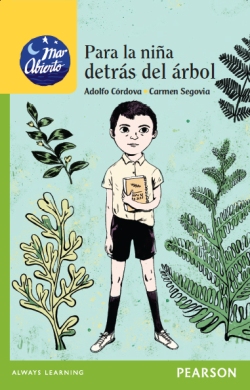
Pearson, 2015. Postulado a Los mejores libros para niños y jóvenes 2016 del Banco del Libro. Guía de libros recomendados de IBBY México 2017 y Recomendado en el Premio Fundación Cuatrogatos 2017.









 This initiative, unprecedented in the history of these biannual congresses, also included a series of workshops for children and teenagers. To me, it was a powerful declaration of values in a world dominated by adult-centric violence. The ongoing global crisis of children’s and youth rights, tragically embodied in the greatest infanticide of the century—happening before our eyes and broadcasted in real-time—was the other pressing issue I sought to bring into this discussion. To denounce.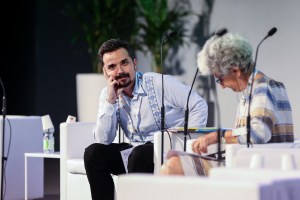

















 Linternas y bosques
7 Comentarios »